
Elastic Sizes: A Width Guide
A practical guide to common elastic widths for babywear, lingerie, waistbands, sportswear and other apparel applications.
Elastic width varies by application and construction. Common examples include 3–6 mm for babywear and fine lingerie, 8–12 mm for sleeves and light gathers, 15–25 mm for skirts and loungewear, 30–50 mm for many waistband applications, and wider options for sportswear and outerwear. Exact producible widths vary by elastic type and construction.
We weave elastic from 3 mm up to 80 mm in Bağcılar, Istanbul, so width is usually the first thing we ask about. The right width balances firm hold against comfort. All Tekiş elastic is produced under OEKO-TEX Standard 100 (No: 2019OK0492), down to fine baby widths.
How is elastic measured?
Elastic is specified by its width — the flat dimension across the band — usually in millimetres. Width is the spec that decides how firm the hold is and how the band sits, so it is the place to start. Construction (woven, knitted, braided) and color follow.
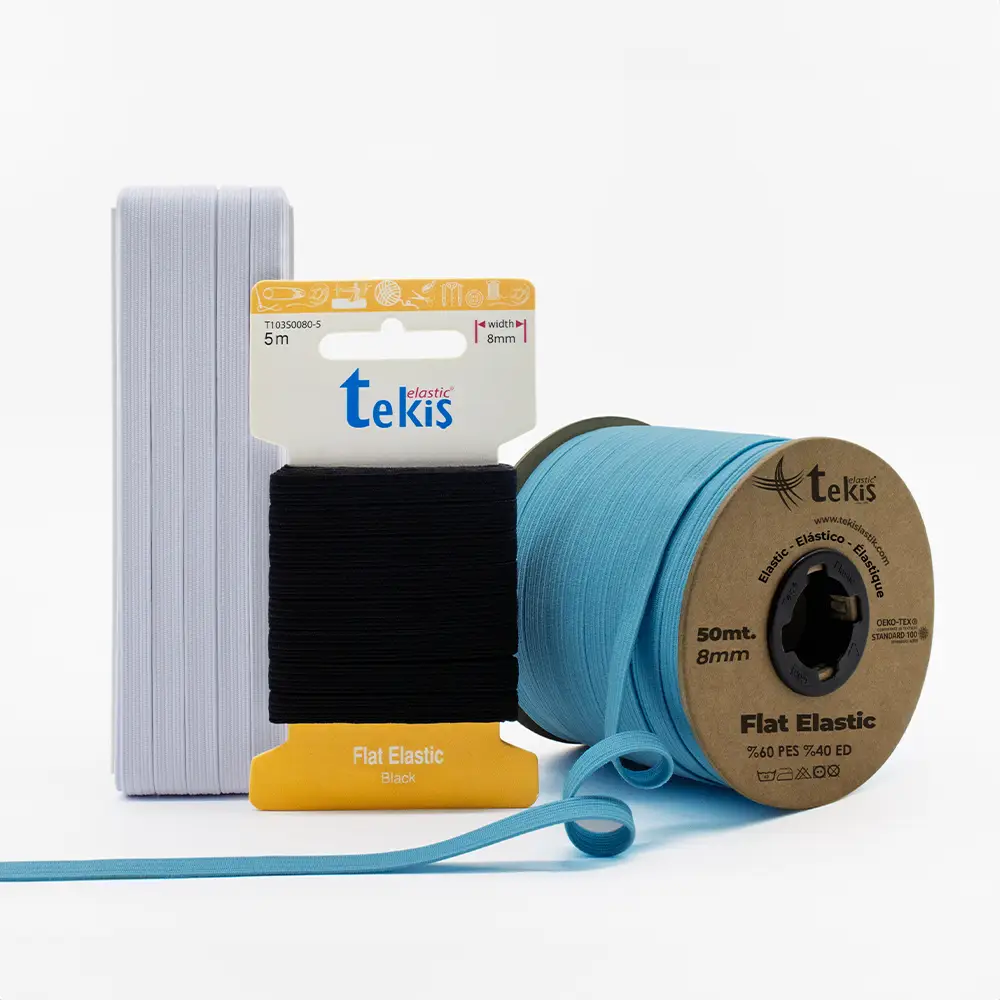
Elastic sizes width guide by application
The widths below are common application guidelines rather than a complete production range. Exact available widths vary by elastic construction and product type.
| Width | Typical use |
|---|---|
| 3–4 mm | Baby clothes, fine lingerie, craft |
| 5–6 mm | Lingerie, light cuffs, mask loops |
| 8–10 mm | Sleeves, cuffs, light gathers |
| 12–15 mm | Children’s wear, light waist gathers |
| 20–25 mm | Skirts, pyjamas, loungewear |
| 30–40 mm | Trouser & skirt waistbands |
| 50–80 mm | Sportswear, outerwear, shapewear bands |
Which elastic width for a waistband?
For most trouser and skirt waistbands, 30–50 mm is the sweet spot — wide enough to hold without digging in. Use a woven elastic so the band keeps its width and does not roll; see Elastic Types for why woven holds flat.