
Webbing Materials: Nylon, Polyester, PP & Cotton
Webbing Materials;
How the four main webbing fibres compare on strength, stretch, UV and cost — and which to pick.
Polyester, nylon, polypropylene and cotton each offer different general performance characteristics. Polyester is commonly selected as an all-round option, while nylon is often considered where higher strength and abrasion resistance are priorities. Polypropylene is lightweight and can be suitable for cost-sensitive or floating applications, while cotton is selected where a softer, natural feel is important. Actual strength, stretch, UV behaviour and water performance depend on the fibre grade, webbing construction, treatment and test method.
We weave webbing in polyester, nylon, polypropylene and cotton in Istanbul. Both the fibre and the webbing construction influence how a strap performs, so the most suitable material depends on the application and required properties. Tekiş webbing is produced under OEKO-TEX Standard 100 within the scope of our current certification.
What is webbing made of?
Most webbing is woven from one of four fibres: polyester, nylon, polypropylene or cotton. Synthetics dominate load-bearing straps because they are strong and consistent; cotton is chosen where a soft, natural hand matters more than strength. The fibre sets strength, stretch, UV resistance, water behaviour and cost.
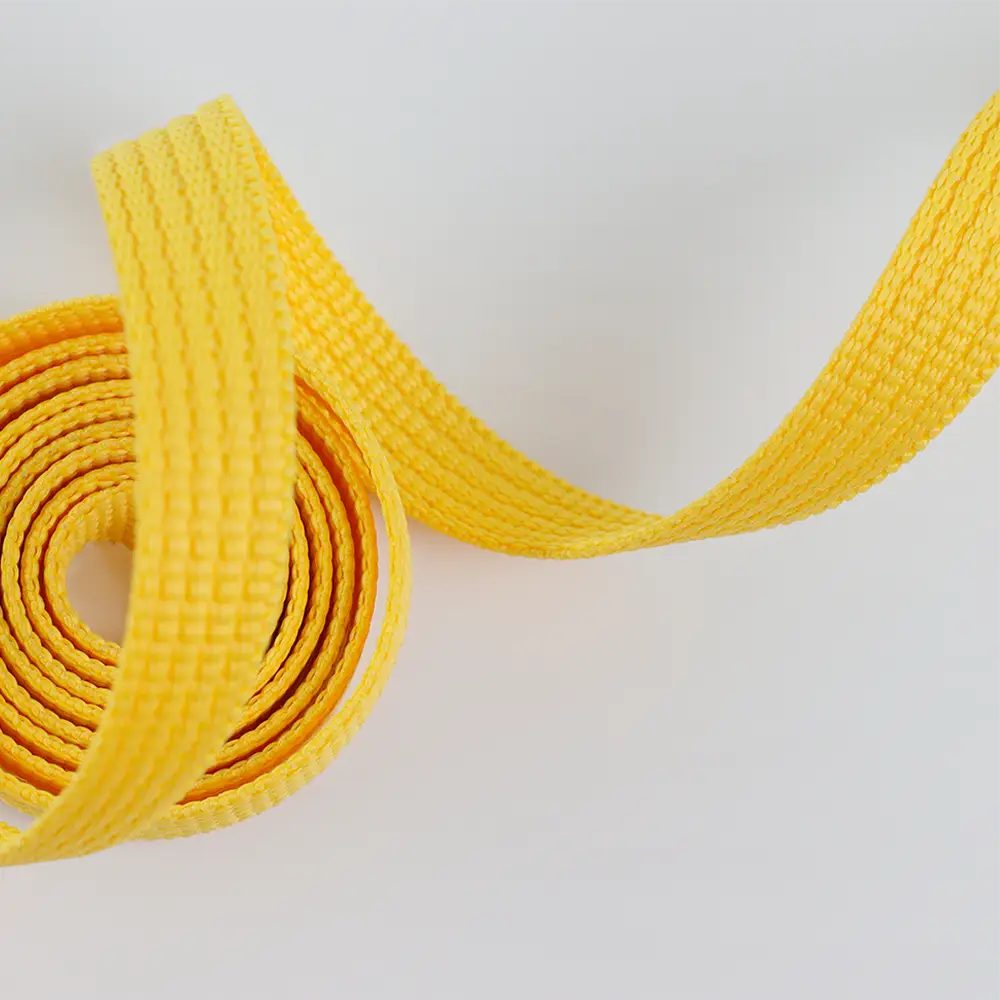
How do the four webbing fibres compare?
General comparison only. Actual performance depends on fibre grade, yarn specification, webbing construction, treatment and test method. Product-specific tested values should be used where defined mechanical performance is required.
| Fibre | Strength | UV | Water | Cost | Best for |
|---|---|---|---|---|---|
| Polyester | High | Excellent | Low absorption | Medium | Bag straps, outdoor, all-round |
| Nylon | Highest | Good | Absorbs, weakens wet | Higher | Heavy load, abrasion |
| PP | Lower | Weak | Floats, none | Lowest | Light, low-cost, marine surface |
| Cotton | Lowest | Moderate | Absorbs | Medium | Apparel, soft natural feel |
- Polyester — generally offers a useful balance of strength, dimensional stability and outdoor performance; final properties depend on construction and treatment.
- Nylon — commonly selected where higher strength and abrasion resistance are priorities; moisture and wet-condition performance depend on the specific grade and construction.
- Polypropylene — lightweight and able to float; UV performance depends on the material grade, stabilisation and webbing construction.
- Cotton — selected primarily for its soft, natural handle; mechanical performance depends on the yarn and webbing construction.
Which webbing material should I choose?
- Bag straps & luggage → polyester (UV + color stability) or nylon for heavy loads.
- Pet collars & leashes → polyester or nylon — see choosing dog collar webbing.
- Outdoor & marine surface → polyester for UV; PP where floating helps.
- Apparel & belts → cotton or polyester for hand and appearance.
- Budget / disposable → polypropylene.
Webbing Materials : Polyester or nylon webbing — which is better?
This is the most common question. Choose polyester when UV stability and color-fastness matter — outdoor gear, bag straps, anything in sun. Choose nylon when you need maximum strength and abrasion resistance and the strap stays mostly dry — heavy load and industrial uses. Both are far stronger than PP or cotton.