
How to Sew Elastic: Methods & Tips
Casing, direct and fold-over methods, how to measure the right length, and the mistakes to avoid.
There are three main ways to sew elastic: the casing (tube) method — thread elastic through a fabric channel; the direct method — stretch and stitch elastic straight onto the fabric with a zigzag; and fold-over elastic — wraps and finishes the edge in one pass. Cut the elastic a little shorter than the body measurement so it gathers and holds, and always use a zigzag stitch.
We weave the elastic; how you sew it decides whether it holds. As a manufacturer in Bağcılar, Istanbul, here are the three methods our customers use, the length formula and the mistakes we see most. All Tekiş elastic is OEKO-TEX Standard 100 certified (No: 2019OK0492).
How to Sew Elastic? How much elastic do I need?
Cut the elastic shorter than the opening so it gathers the fabric and grips. A safe starting point for a waistband is the body measurement minus 2–5 cm, plus about 2 cm to overlap and join the ends. Snug garments take a little more reduction; relaxed ones a little less. Always test on a scrap first.
The three methods
1. Casing (tube) method
Fold the fabric edge to make a channel, stitch it leaving a gap, thread the elastic through with a safety pin, overlap and sew the ends, then close the gap. Best for a clean finish and easy replacement.
2. Direct (stitch-on) method
Divide both the elastic and the opening into quarters and pin them together. Sew with a zigzag, stretching the elastic to match the fabric between pins. Best for activewear and a snug, no-slip band.
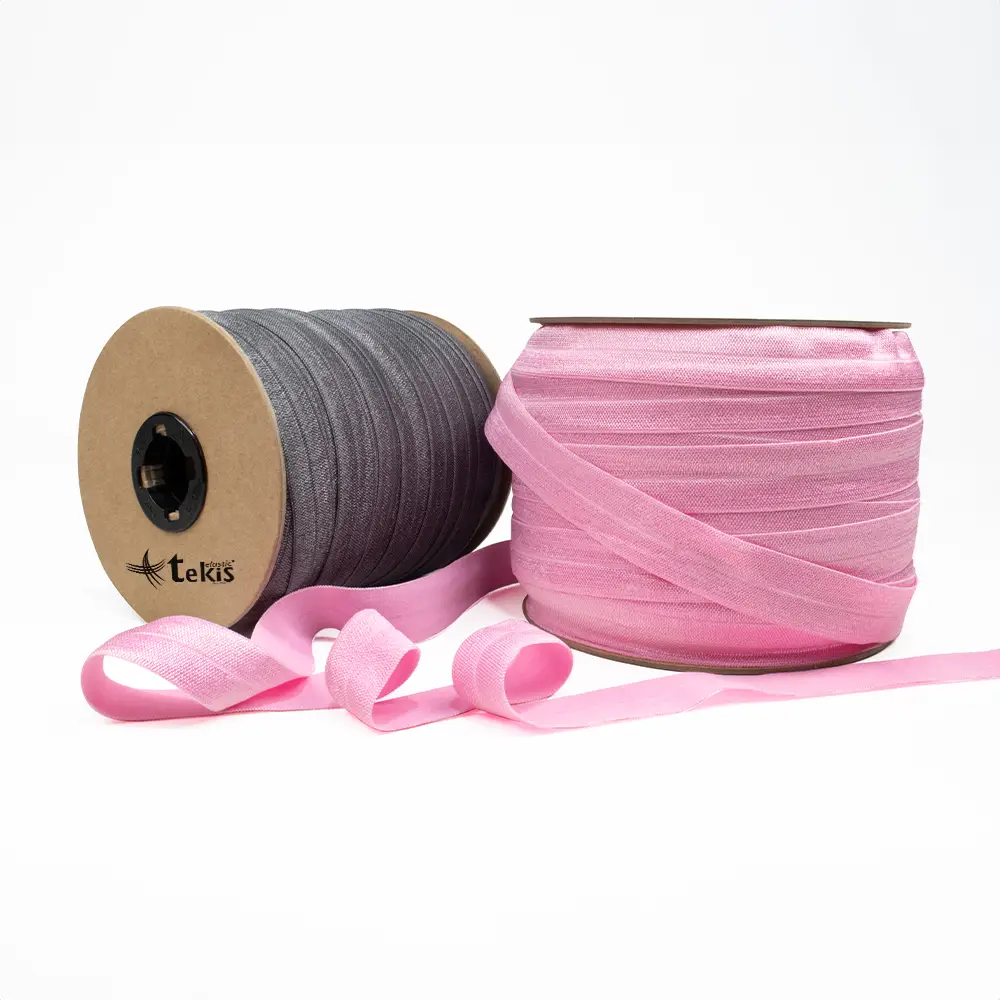
3. Fold-over elastic (FOE)
FOE folds over the raw edge and finishes it in one pass — ideal for lingerie and babywear. For the full step-by-step, see How to Sew Fold-Over Elastic.
6 common mistakes to avoid
- Straight stitch instead of zigzag — a straight stitch can’t stretch and snaps; use zigzag or 3-step zigzag.
- Over-stretching — pulling too hard fatigues the rubber and the band slackens early.
- Wrong width — too narrow rolls, too wide digs in; see Elastic Sizes.
- Twisted elastic in the casing — keep it flat as you thread it.
- Weak join — overlap ends ~2 cm and secure with a box stitch.
- Hot ironing the elastic — heat damages the rubber; press the fabric, not the band.